How Long Is Pasta Sauce Good for in the Fridge: Storage Times, Tips, and Warning Signs
There’s a particular kind of kitchen guilt that comes from opening the fridge, spotting a half-used jar of pasta sauce tucked behind the milk, and having no idea how long it’s actually been there. It’s one of those everyday questions that seems simple until you’re standing over the sink, sniffing a spoonful and trying to decide if tonight’s dinner is a good idea or a bad one. This article walks through exactly how long pasta sauce lasts in the fridge, what changes between homemade and store-bought versions, the warning signs that mean it’s time to let go, and the storage habits that can stretch its life a little further.
Whether the sauce in question came from a jar, a can, or a pot simmering on the stove all afternoon, the rules aren’t identical. Understanding the difference can save you from either tossing perfectly good sauce too early or, worse, serving something that’s turned.
Homemade Pasta Sauce: How Long It Lasts
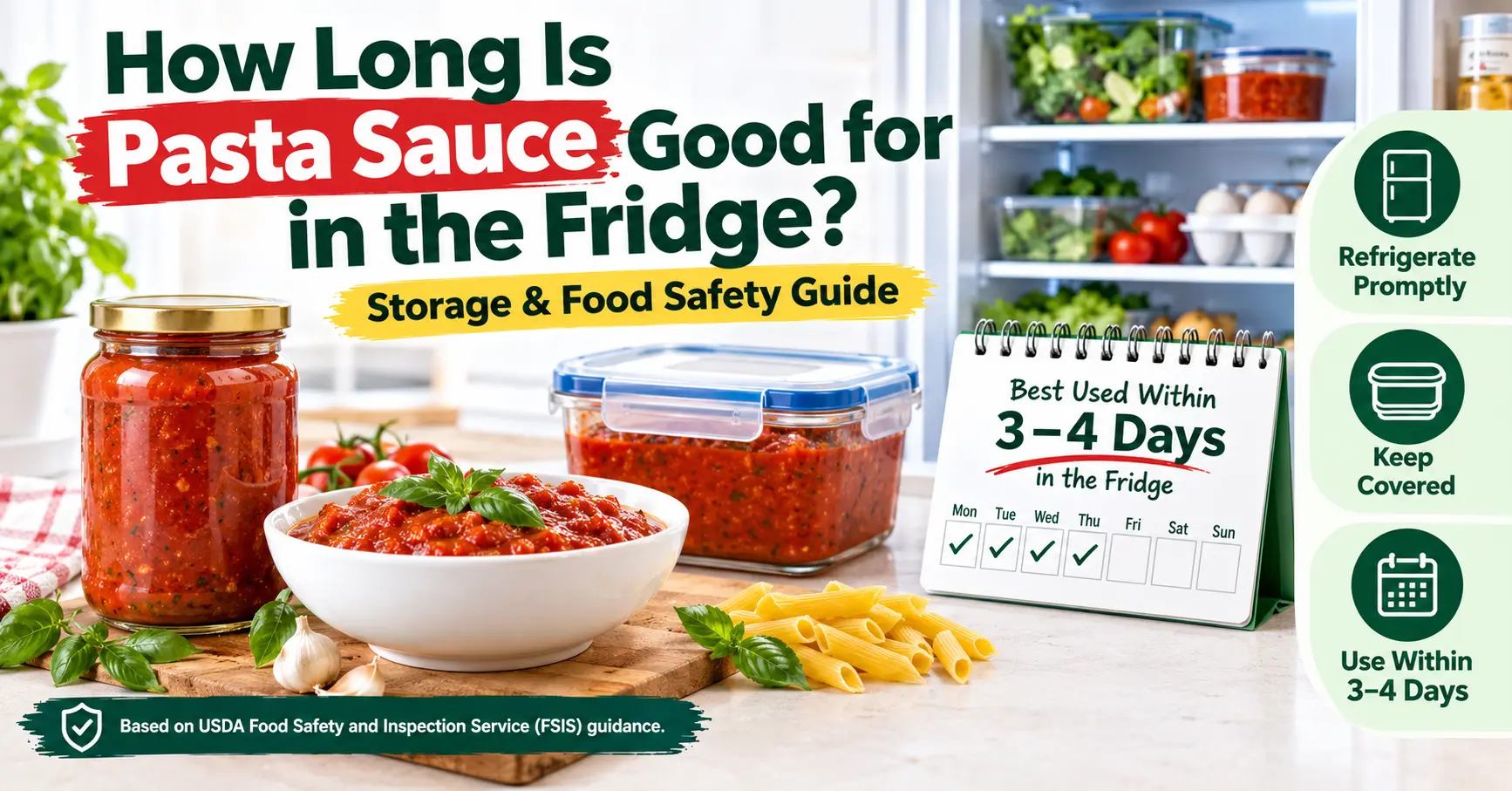
A pot of homemade marinara or meat sauce, once it’s cooled and moved into an airtight container, generally holds up in the refrigerator for three to five days. That window assumes a few things went right along the way: the sauce was cooked thoroughly, it wasn’t left sitting out at room temperature for hours before being refrigerated, and the container it’s stored in actually seals.
The ingredients matter too. A simple tomato-and-herb sauce tends to last closer to the five-day mark, while sauces built around cream, cheese, or fresh dairy often drift toward the shorter end of that range, sometimes closer to three days, because dairy spoils faster than tomatoes do. Sauces with cooked meat added in should also be treated more cautiously, since meat introduces its own timeline for bacterial growth. If you’re not sure you’ll use the whole batch within that window, portioning it into smaller containers and freezing part of it is usually the safer move.
Store-Bought Pasta Sauce: How Long It Lasts
Unopened jarred pasta sauce can sit in the pantry for months, often a year or more past its printed date, thanks to the way it’s processed and sealed. Once that jar is opened, though, the clock changes entirely. Refrigerated after opening, most jarred sauces are good for five to seven days, and some brands with higher acidity or added preservatives can stretch slightly beyond that.
Canned sauce behaves a bit differently once opened. Because cans aren’t designed to be resealed the way jars are, it’s best to transfer any leftover sauce from a can into a separate airtight container before refrigerating, rather than leaving it in the can itself. Doing so avoids a metallic taste developing and keeps the sauce fresher for roughly the same five-to-seven-day window as an opened jar. Checking the label is still worthwhile, since manufacturers sometimes list their own recommended timeframe, and that guidance should take priority over general rules of thumb.
Signs Your Pasta Sauce Has Gone Bad
Smell is usually the first and most reliable clue. Fresh pasta sauce should smell bright, slightly sweet, and tomato-forward. If it starts smelling sour, yeasty, or just off in a way that’s hard to describe, that’s a strong signal it’s no longer safe to eat.
Beyond smell, look for visible changes. Mold appearing on the surface, even a small spot, means the whole batch should be discarded rather than scooped around. Bubbling or fizzing when the sauce is stirred can indicate fermentation has started, which happens when unwanted bacteria or yeast have begun breaking the sauce down. A noticeable change in color, texture that’s become slimy or unusually thick, or a separation that doesn’t look like normal oil settling are all additional red flags. When any of these signs show up, it’s not worth the risk of tasting it to confirm; trusting your senses and erring on the side of caution is the safer habit.
How to Store Pasta Sauce Properly
Storage habits make a real difference in how long sauce stays good. Letting a pot of sauce cool to room temperature before refrigerating is fine, but it shouldn’t sit out for more than about two hours, since that’s the window where bacteria multiply fastest at room temperature. Dividing a large batch into smaller, shallow containers helps it cool faster and more evenly than leaving it in one deep pot.
An airtight container is essential, whether that’s a glass jar with a tight lid, a plastic container with a good seal, or the original jar closed properly if the sauce came from the store. Keeping the sauce toward the back of the fridge, where the temperature stays more consistent, rather than in the door, where temperature fluctuates every time the fridge opens, also helps it last closer to the upper end of its expected range.
Freezing Pasta Sauce for Longer Storage
When five to seven days simply isn’t enough time to use up a batch, freezing is the most reliable next step. Most tomato-based sauces freeze well for two to three months without much loss in flavor or texture, and some well-sealed batches hold up even longer. Freezer bags laid flat, ice cube trays for smaller portions, or airtight freezer-safe containers all work, depending on how much sauce needs storing and how it will be used later.
Cream-based sauces are the exception worth knowing about. Dairy tends to separate and turn grainy after freezing and thawing, so a sauce built around cream or cheese generally doesn’t freeze as gracefully as a tomato-based one. If freezing a cream sauce is unavoidable, expect to whisk it thoroughly while reheating to help bring the texture back together.
Conclusion
Pasta sauce doesn’t come with a single universal expiration rule, but the guidelines are straightforward once you know them: homemade sauce holds for three to five days in the fridge, opened jarred or canned sauce for five to seven, and freezing extends either option by months when stored properly. Paying attention to smell, texture, and appearance will always tell you more than a date on a label. A little care in storage, and a willingness to trust your senses when something seems off, is really all it takes to keep dinner both delicious and safe.