How Long Do Coffee Beans Last? A Complete Guide to Coffee Freshness
Ask ten coffee drinkers how long their beans stay fresh and you’ll get ten different answers most of them wrong. Some people swear by the “best by” date stamped on the bag. Others toss beans the moment the bag has been open more than a week, convinced anything older is undrinkable. Neither instinct is quite right, and the confusion costs a lot of good coffee.
The truth is that coffee doesn’t expire the way milk or bread does. It degrades gradually, losing aroma and flavor complexity long before it becomes unsafe to drink. Understanding that distinction changes how you shop, how you store, and how you brew. This article walks through what actually happens to coffee beans over time, how long they last in different states — whole bean, ground, opened, unopened — and what you can do to keep every cup tasting like it should.
What Actually Happens to Coffee Beans Over Time
The moment beans leave the roaster, they begin releasing carbon dioxide in a process called degassing, which is why freshly roasted coffee often looks like it’s fizzing slightly when hot water hits it. That same process is also the beginning of the bean’s slow decline.
As beans degas, they simultaneously begin absorbing oxygen, and oxidation is the real enemy of flavor. Oxygen breaks down the essential oils that give coffee its brightness, sweetness, and depth, replacing them with flat, stale, sometimes papery or rancid notes. Light, heat, and moisture accelerate this process even further. None of this makes old coffee dangerous to drink — it simply becomes duller, less aromatic, and less enjoyable, which is really what people mean when they ask how long coffee beans “last.”
How Long Do Whole Bean Coffee Beans Last
Whole beans hold up far better than ground coffee because their surface area is smaller, which slows oxidation. An unopened bag of whole bean coffee, stored properly in a cool, dark place, typically retains good flavor for six to nine months past the roast date, and many roasters print a best-by date roughly a year out.
Once you open the bag, the clock speeds up. Whole beans generally taste their best within two to four weeks of opening, assuming they’re kept sealed and away from light and heat. They’re not ruined after that window closes, but you’ll notice a gradual softening of aroma and a loss of the brighter, more complex notes that make specialty coffee interesting. If you buy coffee in bulk, it’s worth portioning beans into smaller airtight containers rather than repeatedly opening one large bag, since every exposure to air chips away at freshness.
How Long Does Ground Coffee Last
Grinding coffee multiplies its surface area dramatically, and with it, the speed of oxidation. Ground coffee that’s been properly sealed and stored typically stays reasonably fresh for three to five months unopened, but once opened, that window shrinks to about one to two weeks for peak flavor.
This is the main reason experienced coffee drinkers grind beans just before brewing rather than buying pre-ground coffee in advance. A burr grinder at home costs relatively little compared to the flavor it preserves, and the difference between coffee ground fresh and coffee that’s been sitting ground for a month is noticeable even to casual drinkers. If pre-ground coffee is your only option, buying smaller bags more frequently, rather than one large bag that lingers in the pantry, is the better strategy.
Does Coffee Ever Actually Go Bad
Coffee beans don’t spoil in the way perishable foods do, since they contain very little moisture and no ingredients that support dangerous bacterial growth under normal storage. That said, they can develop rancid, musty, or flat flavors that make brewing them a disappointing experience rather than a health risk.
There are exceptions worth knowing. If beans are exposed to moisture and develop visible mold, or if they’ve picked up a chemical or off smell from being stored near strong odors, it’s best to discard them. Rancid coffee oils, which develop after long periods of oxidation, can also produce a sour or bitter taste that most people find unpleasant even if it isn’t technically unsafe. In short: old coffee is a flavor problem far more often than a safety problem.
Signs Your Coffee Beans Have Lost Their Freshness
The clearest sign is smell. Fresh coffee has a noticeable, rich aroma the moment you open the bag; stale coffee smells muted or almost absent. If you have to bring the bag close to your face to detect anything, the beans have likely lost much of their character.
Visual and brewing cues matter too. Fresh beans have a slight sheen from natural oils, especially in darker roasts, while very old beans often look dry and dull. During brewing, fresh coffee produces a noticeable bloom — that bubbling puff when hot water first hits the grounds, caused by escaping carbon dioxide. Minimal or no bloom is one of the most reliable signs that beans have gone flat. The taste itself tends to shift from bright and layered to one-dimensional, sometimes with cardboard-like or sour undertones.
Best Ways to Store Coffee Beans for Maximum Freshness
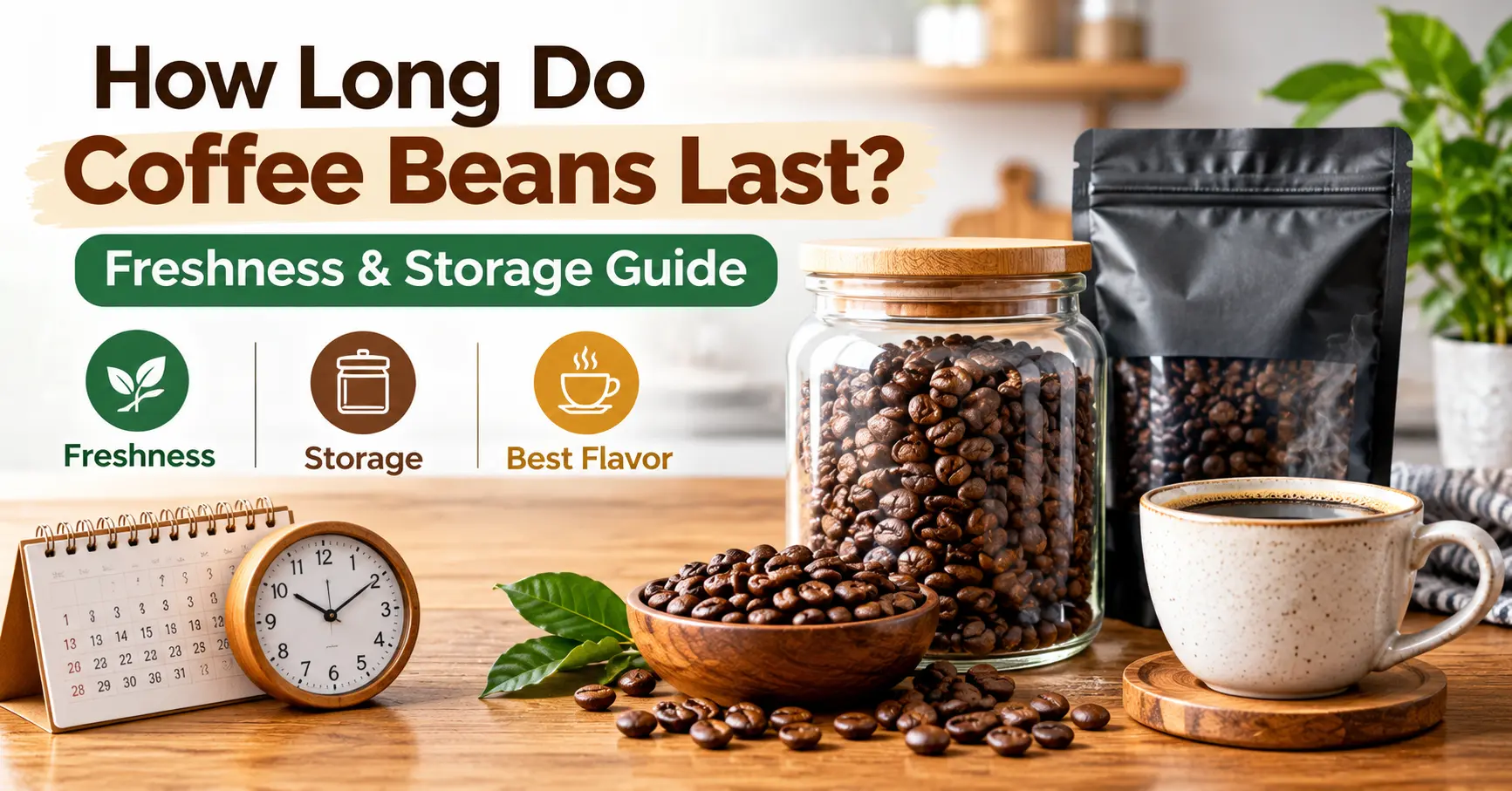
Storage is the single biggest factor within your control. Clear glass jars might look appealing on a countertop, but they expose beans to light and accelerate staling, so an opaque canister with a one-way valve or tight seal is a better choice. Learning simple kitchen techniques, including quick microwave cooking methods, can also make meal preparation easier when you’re trying to save time without sacrificing quality.
Temperature consistency matters as much as temperature itself. A cool, dry pantry or cupboard works better than a spot near the stove or a sunny window. Freezing coffee is a debated topic among enthusiasts, but current thinking generally supports freezing only for long-term storage of beans you won’t use for weeks, portioned into small airtight bags to avoid repeated thawing and refreezing, which introduces moisture and accelerates degradation. For coffee you’ll use within a month, room-temperature storage in a proper airtight container is simpler and just as effective.
Conclusion
Coffee beans don’t have a hard expiration point so much as a slow fade, one governed by oxidation, light, heat, and moisture rather than a strict deadline. None of it turns dangerous with age; it simply loses the qualities that make a cup worth savoring in the first place. Paying attention to how you store your coffee, and how quickly you use it once opened, is really the whole secret — good beans deserve a little care between the roaster and the cup. If you’re building better kitchen habits, understanding timing and storage across different foods — from coffee freshness to how long fresh pasta lasts and cooks — can help reduce waste and improve everyday meals.