How Long Does Egg Salad Last? A Complete Storage and Safety Guide
Egg salad shows up at potlucks, tucked into sandwiches for a quick lunch, or scooped onto crackers as a snack, and it’s one of those dishes people assume they know how to handle. Yet because it’s built around two perishable ingredients, hard-boiled eggs and mayonnaise, it spoils faster than most people expect, and the consequences of getting the timing wrong aren’t pleasant. This guide walks through exactly how long egg salad stays safe to eat, what actually causes it to go bad, how to store it properly, and the warning signs that tell you it’s time to toss it rather than taste it.
How Long Does Egg Salad Actually Last in the Fridge?
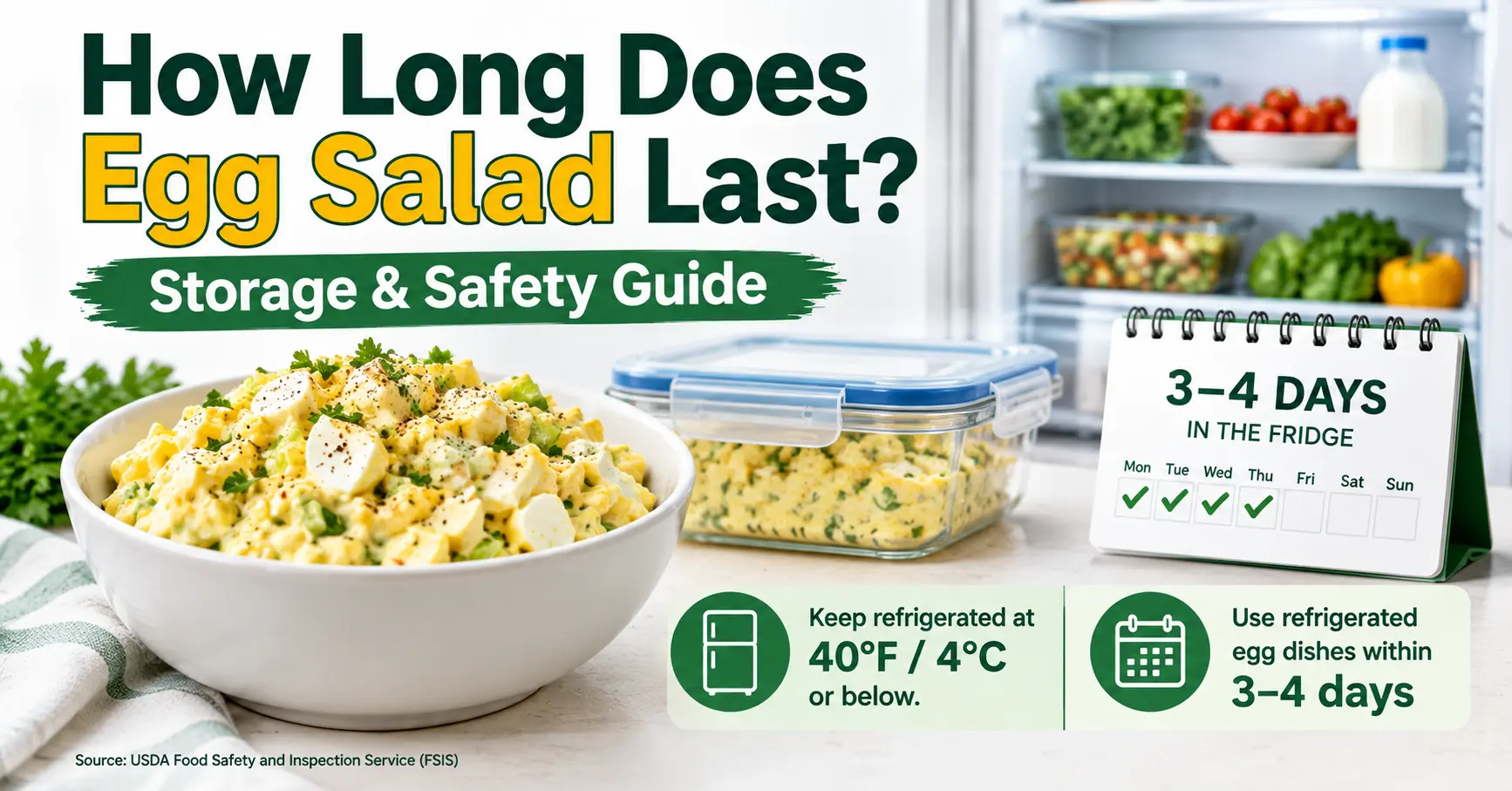
Properly stored in an airtight container, egg salad generally lasts three to five days in the refrigerator. That window assumes the eggs were cooked and cooled correctly, the mayonnaise hasn’t been sitting out, and the salad went into the fridge within two hours of being made. Homemade versions tend to land on the shorter end of that range, closer to three or four days, especially if you used fresh mayonnaise rather than a shelf-stable commercial brand.
Store-bought egg salad, the kind sold in tubs at the deli counter, often carries its own use-by date printed on the container, and that date should take priority over general guidelines. Once opened, though, the same three-to-five-day clock generally applies, and an open container should never be trusted much beyond that regardless of what the label says. If you’re ever unsure whether a batch was made yesterday or four days ago, it’s safer to treat it as older rather than assume the best.
What Causes Egg Salad to Spoil So Quickly?
Two ingredients drive the short shelf life. Hard-boiled eggs are a protein-rich food that bacteria thrive on once they’re out of the shell and exposed to air, and they lose their protective barrier the moment they’re peeled and chopped. Mayonnaise, meanwhile, is an emulsion of oil and egg yolk that stays stable at cold temperatures but breaks down and becomes a breeding ground for bacteria once it warms up, even briefly.
Combine the two and you get a mixture that sits squarely in what food safety experts call the temperature danger zone whenever it isn’t properly chilled, roughly between 40°F and 140°F. Bacteria such as Salmonella and Listeria multiply rapidly in that range, and because mayonnaise masks a lot of textural changes, egg salad doesn’t always look or smell wrong even after it’s become unsafe. That’s part of why relying on timing and temperature rules matters more than trusting your senses alone.
Proper Storage Tips to Maximize Freshness
Getting the most safe shelf life out of egg salad starts before it ever reaches the fridge. Cool the hard-boiled eggs completely before chopping and mixing them in, since adding warm eggs to mayonnaise introduces heat into the mixture and shortens its safe window. Use a clean bowl and clean utensils throughout preparation, and avoid double-dipping a spoon that’s touched your mouth back into the serving bowl, since that introduces bacteria that speeds up spoilage.
Once mixed, transfer the egg salad into a shallow, airtight container rather than leaving it in a wide mixing bowl loosely covered with plastic wrap. Shallow containers cool faster and more evenly, which matters because the goal is to get the salad below 40°F as quickly as possible after preparation. Store it toward the back of the refrigerator rather than in the door, since door shelves experience more temperature fluctuation every time the fridge opens. Label the container with the date it was made if you tend to lose track, since that single habit prevents more spoiled food from being eaten than almost any other storage tip.
Can You Freeze Egg Salad?
Freezing is technically possible but not recommended, and most people who try it once don’t try it again. The problem is textural rather than a matter of safety alone. Mayonnaise doesn’t freeze and thaw gracefully; it separates, turning watery and grainy once defrosted. Hard-boiled egg whites undergo a similar transformation, becoming rubbery and oddly spongy after time in the freezer, which changes the entire mouthfeel of the salad.
If you’re planning ahead for meals, a better approach is to hard-boil and refrigerate the eggs separately, then mix in the mayonnaise and seasonings closer to when you actually plan to eat the salad. Whole hard-boiled eggs in their shells actually hold up reasonably well in the fridge for about a week, giving you more flexibility than trying to freeze the finished salad ever would.
Signs Your Egg Salad Has Gone Bad
Trusting your nose and eyes is a reasonable second line of defense, even though it shouldn’t be your only one. A sour, off smell is usually the clearest signal, distinct from the normal egg and mayonnaise scent you’d expect. Discoloration is another red flag, particularly a grayish or greenish tint developing around the edges of the mixture or on the eggs themselves.
Texture changes matter too. If the salad looks noticeably watery, with liquid pooling at the surface or the mixture appearing slimy rather than creamy, that separation is a sign the emulsion has broken down and bacteria may already be present in unsafe amounts. Any mold, even a small spot, means the entire batch should be discarded rather than scooped around. When in doubt, the food safety guidance is blunt but useful: if it’s been more than five days, or if anything about the smell, look, or texture seems off, throw it out rather than risk it.
Egg Salad Safety Tips for Meal Prep and Travel
Egg salad’s popularity as a make-ahead lunch runs into a real problem when it comes to warm environments, whether that’s a lunch bag left in a car, a packed picnic basket, or an office where the fridge is unreliable. The two-hour rule is the one to remember: egg salad shouldn’t sit at room temperature for more than two hours total, and that window shrinks to just one hour if the ambient temperature climbs above 90°F, which covers most summer afternoons and hot cars.
For meal prepping, pack egg salad in an insulated bag with a frozen gel pack rather than relying on the bag’s insulation alone. If you’re bringing it to a gathering, keep the serving bowl nestled in a larger bowl of ice, refreshing the ice as it melts, and don’t leave the dish out on a buffet table for the entire duration of a long event. These small habits matter more than they might seem, since egg salad’s smooth, mild appearance rarely gives away when it’s crossed into unsafe territory.
Conclusion
Egg salad is simple to make but easy to mishandle, mostly because its two main ingredients, eggs and mayonnaise, are both fast to spoil once they leave a controlled temperature. Sticking to the three-to-five-day refrigerator window, cooling it promptly after preparation, and paying attention to smell, texture, and color will keep most people safely fed without much extra effort. The real habit worth building isn’t complicated: treat egg salad as a short-lived dish, store it properly from the start, and when in doubt, let it go rather than risk it.