How Long Do iPhones Last? A Realistic Look at iPhone Lifespan and Longevity
Anyone who has owned a smartphone for more than a few years has probably wondered the same thing while staring at a cracked screen or a battery that drains by lunchtime: is it time to replace this phone, or can it keep going a while longer? For iPhones owners, that question comes with a specific set of expectations, since Apple devices have built a reputation for holding up better and lasting longer than many competing phones. But reputation only goes so far, and the real answer depends on a mix of hardware quality, software support, daily habits, and simple luck.
This article breaks down what actually determines how long an iPhone lasts, from battery chemistry to software update cycles, and offers a grounded, practical picture rather than a marketing pitch. We will look at the factors that shape a phone’s usable life, the warning signs that suggest a device is nearing retirement, and the everyday habits that can meaningfully extend an iPhone’s working years. By the end, you should have a clear sense of what to expect from your own device and how to get the most out of it before deciding to upgrade.
How Long Do iPhones Really Last?
On average, most iPhones remain fully functional and pleasant to use for somewhere between four and seven years, though the exact number varies quite a bit depending on the model and how it’s treated. A phone purchased new and cared for reasonably well can often serve as a primary device for five years before performance or battery health starts to feel like a real limitation. Many people then continue using it for another year or two in a secondary role, such as a backup phone, a device for a child, or a dedicated music and camera unit.
This longevity is not an accident. Apple builds iPhones with more durable materials than many budget or mid-range Android competitors, uses a unified hardware and software ecosystem that reduces the kind of fragmentation issues that plague other platforms, and has historically supported older models with operating system updates for far longer than most manufacturers. That combination means the ceiling for how long an iPhone can last is genuinely high. The floor, however, still depends heavily on the owner, since a phone dropped repeatedly onto concrete or left in direct sunlight all summer will not last nearly as long as one treated with basic care.
Factors That Affect an iPhone’s Lifespan
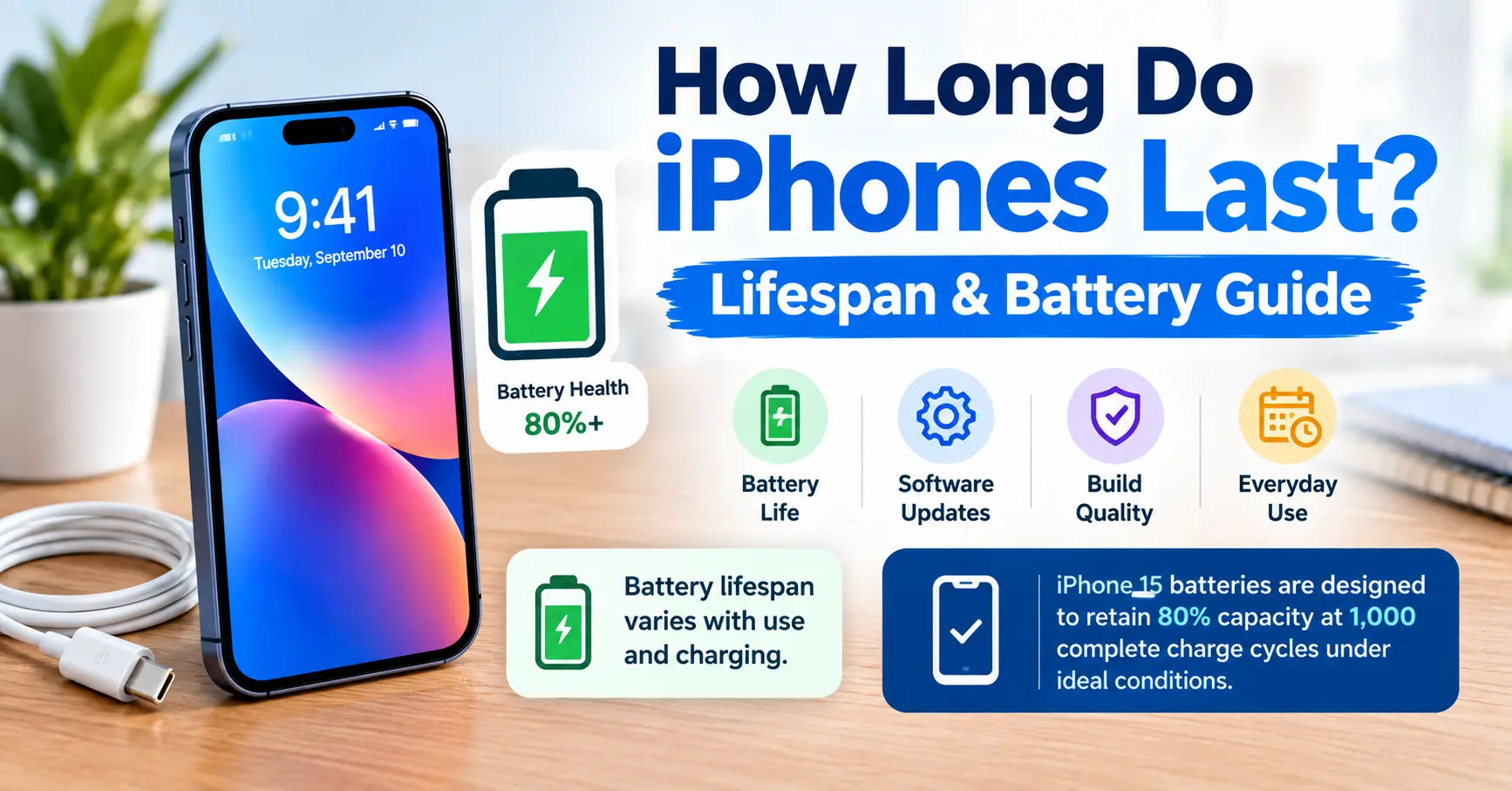
Several variables combine to determine whether a particular iPhone becomes a five-year workhorse or an eighteen-month disappointment. The single biggest factor is battery health, since lithium-ion batteries degrade with every charge cycle regardless of brand or price point. A battery that started at one hundred percent capacity will typically lose a noticeable amount of that capacity after a few hundred full charge cycles, which for most people translates to roughly two to three years of daily use before the drop becomes obvious in everyday performance.
Beyond the battery, physical durability plays a major role. Screen glass, water resistance seals, and the internal frame all wear down through exposure to drops, moisture, dust, and temperature extremes. A phone that lives in a sturdy case and avoids extreme heat will generally outlast an identical model that spends its life naked in a pocket next to keys and coins. Storage capacity matters too, since a phone with too little storage for a user’s photo library or app habits tends to feel sluggish and frustrating long before the hardware itself is actually worn out, pushing some owners toward an earlier upgrade than strictly necessary.
Battery Life and How It Impacts Longevity
Battery performance is usually the first thing people notice as an iPhones ages, and it’s often the deciding factor in when someone chooses to upgrade. Apple’s own guidance has long suggested that a battery is designed to retain a large majority of its original capacity after around five hundred complete charge cycles under normal conditions. In practice, that means a phone charged once a day will often show meaningful battery wear within two to three years, manifesting as unexpected shutdowns in cold weather, slower charging, or a battery percentage that drops rapidly during moderate use.
Importantly, a weakening battery does not mean the phone itself is dying. Apple has offered battery replacement services for years at a fraction of the cost of a new device, and swapping in a fresh battery can effectively reset the clock on how the phone feels day to day. Many longtime iPhone owners get an additional two or three years of solid use simply by replacing an aging battery rather than replacing the entire device, which is often the single most cost-effective way to extend an iPhone’s practical lifespan.
Software Updates and Long-Term Support
One of the more underappreciated reasons iPhones tend to last longer than many competing phones is the length of software support Apple provides. While policies have shifted somewhat over the years, Apple has generally supported iPhone models with the latest version of iOS for around five to six years after release, and even older models that fall off the newest update list often continue receiving critical security patches for a period after that. This is longer than the update window offered by most Android manufacturers, particularly in the budget and mid-range segments.
Continued software support matters because it keeps a phone secure, compatible with current apps, and able to run the features people expect from a modern device. Understanding technology trends and building a successful tech career also requires awareness of how devices, software, and digital platforms continue evolving over time. A phone that stops receiving updates becomes a security liability and gradually loses compatibility with newer apps and services, effectively ending its useful life even if the hardware itself still works perfectly well. This is why the length of a model’s software support window is often a better predictor of how long an iPhone will remain genuinely useful than the hardware specifications alone.
Signs Your iPhone Is Nearing the End of Its Life
There are a handful of fairly reliable signals that an iPhone is approaching the end of its practical usefulness, and recognizing them early can help avoid an unpleasant surprise. Noticeably shorter battery life, apps that take longer to open than they used to, and a phone that runs warm during ordinary tasks are all common early indicators. A Battery Health reading that has dropped well below its original capacity is another strong sign, especially when paired with occasional random shutdowns even though the battery percentage still shows some charge remaining.
Software compatibility issues are a later-stage but very clear signal. When a phone can no longer install the current version of iOS, or when popular apps start requiring an operating system version the device can’t run, that phone has effectively reached the end of its supported life even if it still physically functions. Cracked screens, damaged charging ports, and water damage can also shorten a phone’s remaining lifespan considerably, since these physical issues tend to compound over time and often cost more to repair than they’re worth on an older device.
Tips to Extend the Life of Your iPhones
Extending an iPhone’s usable years is largely a matter of consistent, unglamorous habits rather than any single trick. Using a quality protective case and screen protector from day one dramatically reduces the odds of the kind of physical damage that ends a phone’s life prematurely. Avoiding extreme temperatures, particularly leaving a phone in a hot car or direct sunlight, helps protect both the battery and the internal components from accelerated wear.
On the software side, keeping the operating system updated ensures the phone benefits from the latest security patches and performance improvements rather than falling behind and becoming vulnerable or sluggish. Managing storage by regularly clearing out unused apps, old photos backed up elsewhere, and unnecessary files helps maintain smooth performance as the phone ages. Storage management becomes especially important for users who keep large music libraries, download playlists, or spend time using Spotify on your iPhone, as media files can quickly consume available space. For battery specifically, avoiding letting the charge repeatedly drain to zero or sit at one hundred percent for extended periods, and considering a battery replacement once health drops significantly, are two of the most effective ways to add real years to a device’s working life.
Comparing iPhone Lifespan to Other Smartphones
When placed side by side with competitors, iPhones generally hold their value and usefulness longer than the average Android device, particularly in the budget and mid-range categories where manufacturers often provide only two to three years of software updates. Flagship Android phones from major manufacturers have closed some of that gap in recent years, with several offering extended update commitments closer to what Apple provides, but the broader Android market still varies enormously in how long devices remain supported.
This longer support window is part of why iPhones tend to retain stronger resale value over time. A four-year-old iPhone in good condition often still commands a meaningful price on the used market, in part because buyers know it can still run current software and receive security updates for a while longer. That combination of durability, update longevity, and resale value is a significant part of the overall cost calculation for anyone deciding between platforms, since a phone that remains useful and updated for six years effectively costs less per year of ownership than one that needs replacing after three.
Conclusion
How long an iPhones lasts ultimately comes down to a combination of solid engineering, thoughtful daily habits, and a bit of good fortune. Battery health and software support tend to set the outer boundaries of a device’s useful life, while everyday choices like using a case, avoiding extreme heat, and keeping storage manageable determine how gracefully a phone ages within those boundaries. For most owners, a well-maintained iPhones can realistically serve as a reliable daily device for half a decade or more, and even longer with a timely battery swap along the way. Treated thoughtfully, an iPhone is less a disposable gadget and more a long-term investment that rewards a little bit of ongoing care.