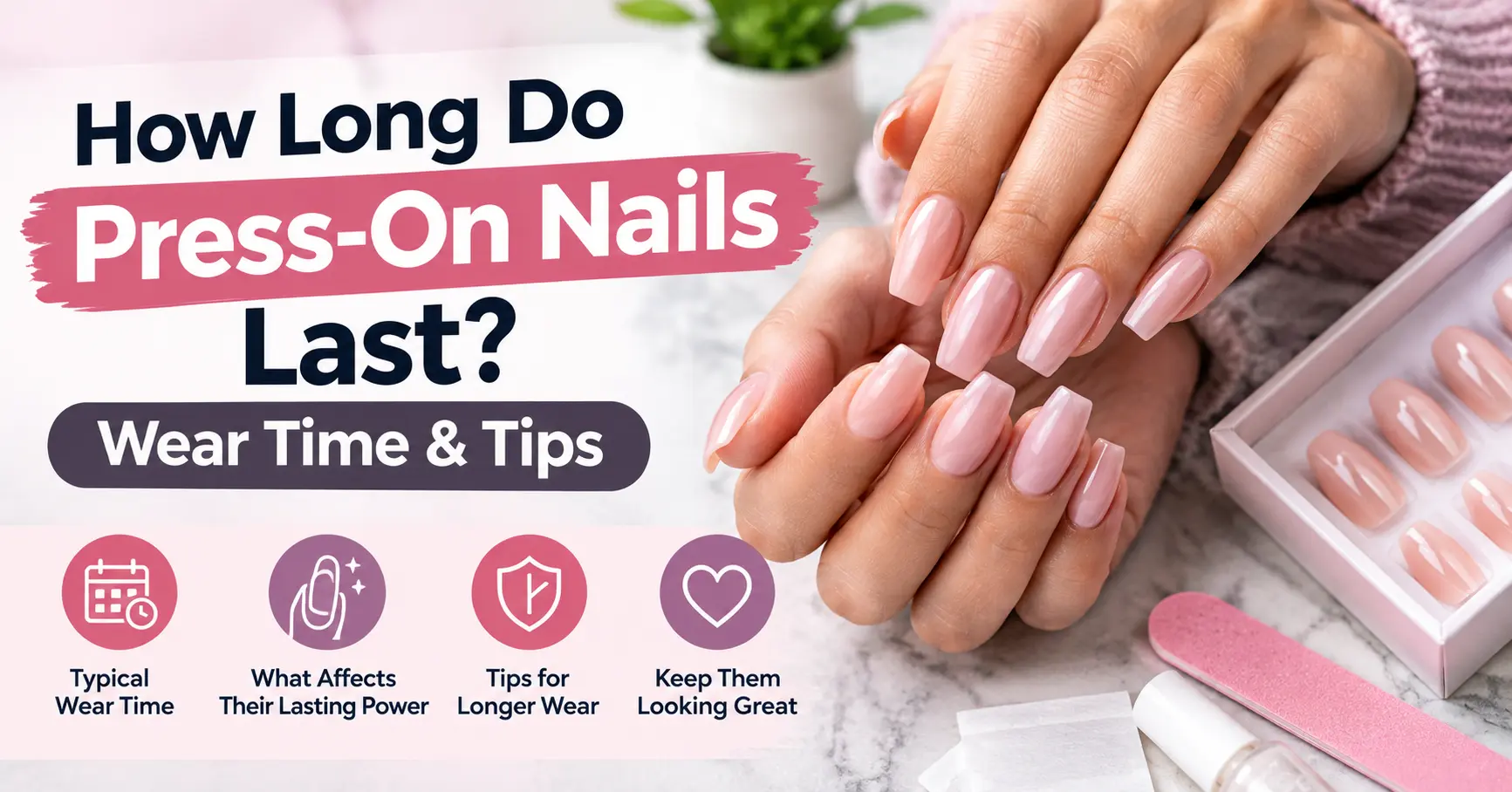
How Long Do Press-On Nails Last? A Complete Guide
Press-on nails have come a long way from the flimsy drugstore kits of decades past. What used to be a temporary fix for a last-minute event has turned into a legitimate alternative to salon acrylics and gels, with some sets now lasting nearly as long as a professional manicure. Still, the question that comes up again and again is simple: how long do press-on nails actually last? The honest answer depends on more variables than most people expect — the type of adhesive used, the quality of the nails themselves, and even how you wash your dishes. This guide breaks down exactly what determines press-on nail longevity, how to extend their wear time, and what to expect from different application methods, so you can get the most out of your set before it’s time for a fresh one.
What Determines How Long Press-On Nails Last
The lifespan of a press-on set comes down to three main factors: the bonding method, the quality of the nail material, and daily wear conditions. Adhesive tabs, nail glue, and gel-based press-ons all behave differently once they’re on your hands, and mixing up expectations between them is one of the most common reasons people feel disappointed by wear time.
Beyond the adhesive, the fit of the nail matters just as much as the glue holding it down. A poorly sized nail that doesn’t match your natural nail bed curve will lift at the edges no matter how strong the bond is underneath. Nail thickness plays a role too — thin, flexible press-ons tend to pop off sooner because they flex with every typed keystroke or dish scrubbed, while sturdier ABS plastic sets hold their shape and resist lifting for longer stretches.
Average Wear Time by Application Method
Adhesive tabs are the fastest and most beginner-friendly option, but they’re also the shortest-lived. Most tab-applied sets last somewhere between two and seven days before nails start popping off, especially around the thumbs and index fingers, which take the most daily friction.
Nail glue applications are the middle ground most people land on, typically lasting one to two weeks with proper prep. Press-on nails applied with glue and a base coat, following a full prep routine of buffing and dehydrating the natural nail, can stretch to two or even three weeks. This is the closest press-ons get to matching the wear time of a salon gel manicure, and it’s why nail glue has become the preferred method for anyone wanting more than a weekend’s worth of wear.
How to Make Press-On Nails Last Longer
Preparation is everything when it comes to extending wear time, and most of the work happens before the nail ever touches your finger. Start by pushing back cuticles, lightly buffing the surface of your natural nail to remove shine, and wiping each nail with rubbing alcohol to strip away oils. Skipping this step is the single biggest reason press-ons fail early, since glue simply cannot bond well to an oily or glossy nail surface.
Sizing each nail correctly before application also makes a noticeable difference. Choosing the right nail shape and design can also help create a more polished appearance that matches different fashion and personal style preferences, especially when following elegant contemporary looks for inspiration. Pressing a nail that’s slightly too wide or narrow forces uneven pressure across the bond, which creates weak points that lift first. Applying firm pressure for the first thirty seconds after placing each nail, avoiding water for at least an hour afterward, and wearing gloves during dishwashing or cleaning can all add several extra days of wear to a single set.
Signs It’s Time to Remove Your Press-Ons
Lifting at the edges is usually the first warning sign, and it’s tempting to ignore for a day or two, but moisture and bacteria can build up in that gap if left unaddressed. Once a nail starts lifting near the cuticle, it’s generally better to remove and reapply that nail rather than let it hang on until it snags on fabric or catches on something and rips off unevenly.
Discoloration underneath the nail or a change in how the press-on feels against your natural nail are also cues worth paying attention to. Wearing a single set for too long without a break can trap moisture against the nail bed, so most nail technicians recommend giving your natural nails a short rest between sets rather than reapplying immediately after removal.
Press-On Nails vs Acrylics and Gel: A Longevity Comparison
Acrylic extensions typically last three to four weeks with fills, and gel manicures usually hold up for two to three weeks with proper curing under UV light, both outlasting even a well-applied press-on set. What press-ons trade in raw longevity, they make up for in flexibility and nail health, since there’s no filing down the natural nail or exposure to harsh chemical removal.
For people who like to switch up their nail look often, this shorter lifespan is actually an advantage rather than a drawback. Nail choices are also often influenced by broader fashion preferences, from classic Modern fashion styles beauty trends that change with seasons. Press-ons can be swapped out for a new color or shape in minutes without a salon visit, while acrylics and gels require a full removal appointment before starting fresh. The choice often comes down to whether someone values low-maintenance longevity or the freedom to change styles on a whim.
Conclusion
How long press-on nails last really comes down to preparation, product choice, and a bit of everyday care. Adhesive tabs offer quick, short-term wear for a single event, while a proper glue application with good prep can rival the staying power of a salon manicure. Whichever method you choose, treating the application process with the same care you’d expect from a professional set is what separates a press-on manicure that lasts days from one that lasts week.