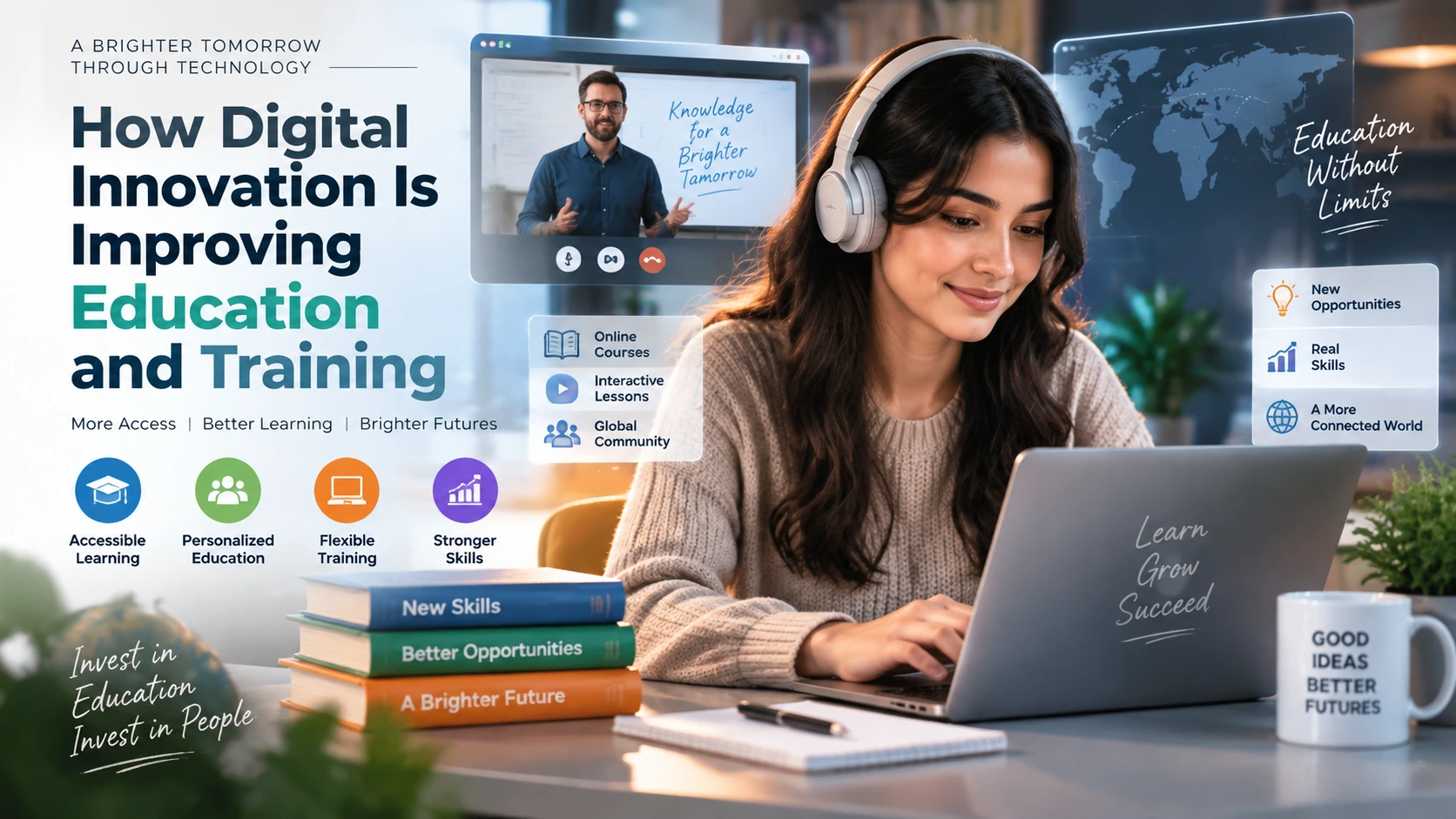
How Digital Innovation Is Improving Education and Training
Education and training have always evolved alongside society, but digital innovation is accelerating that change. From virtual classrooms to interactive learning tools, technology is giving learners and educators new ways to share knowledge. These developments are making education more flexible, accessible, engaging, and better suited to the needs of modern learners.
Making Learning More Accessible
One of the most noticeable benefits of digital innovation is improved access to educational resources. In the past, learners often depended on physical classrooms, printed books, and local institutions. Today, many resources can be accessed online from almost anywhere with a suitable internet connection.
Students can explore courses, watch educational videos, download learning materials, and participate in virtual sessions without always needing to be physically present in a classroom.
This flexibility can benefit people who:
- Live far from educational institutions
- Have busy work or family schedules
- Prefer studying at their own pace
- Need access to specialized subjects
- Want to continue learning outside traditional education
As a result, education can become more adaptable to different lifestyles and circumstances.
Creating More Personalized Learning
Every learner approaches education differently. Some people understand new concepts quickly, while others need additional explanations and practice. Digital innovation can help create learning experiences that accommodate these differences.
Online platforms can allow learners to revisit lessons, complete additional exercises, and move through certain materials according to their progress. This can make learning feel less restrictive than a one-size-fits-all approach.
Personalization can also help learners focus on areas where they need improvement instead of spending unnecessary time on concepts they already understand.
Making Training More Flexible
Digital innovation is also transforming professional training. Businesses can provide employees with online courses, educational videos, assessments, and training materials without requiring everyone to attend the same physical session.
This can be particularly useful for organizations with employees working across different locations or schedules. Instead of arranging repeated classroom sessions, companies can provide structured resources that employees can access when appropriate.
Digital training can cover areas such as:
- Workplace procedures
- Technical skills
- Customer service
- Leadership development
- Compliance training
- Professional development
This approach makes continuous training easier to integrate into the working environment.
Improving Course Management
As digital education expands, organizations need efficient ways to organize courses, learners, assessments, and educational resources. A Learning Management Cloud can help bring these elements together within a centralized digital environment, making it easier for institutions and organizations to manage learning activities.
The goal is not simply to introduce more technology. Effective digital solutions should make educational processes more organized while giving learners and educators a smoother experience.
When learning materials are properly structured, users can spend less time searching for resources and more time focusing on learning itself.
Encouraging Interactive Learning
Traditional education can sometimes rely heavily on lectures and written materials. Digital tools provide opportunities to make learning more interactive.
Videos, quizzes, simulations, animations, discussion boards, and interactive exercises can give learners different ways to engage with information. Rather than simply reading or listening, students may be able to test their knowledge and actively participate in lessons.
For example, a short quiz after a lesson can help learners identify whether they understand the topic. Interactive activities can also break complex subjects into smaller and more manageable sections.
Providing Faster Feedback
Feedback plays an important role in education and training. Learners need to know what they understand and where they can improve.
Digital platforms can make this process faster through automated assessments, online quizzes, progress tracking, and instructor feedback. Immediate results can help learners recognize mistakes while the information is still fresh.
For educators and trainers, digital assessment tools can also make it easier to identify common difficulties across a group. This information can then be used to adjust lessons or provide additional support.
Supporting Collaboration
Learning is often more effective when people can exchange ideas. Digital innovation has created additional opportunities for collaboration between students, teachers, colleagues, and trainers.
Virtual classrooms, group projects, online discussion spaces, and shared documents can allow learners to work together even when they are not in the same location.
Collaboration can help learners develop skills beyond academic knowledge, including communication, teamwork, problem-solving, and critical thinking.
Helping Educators Work More Efficiently
Digital innovation does not only benefit learners. Teachers and trainers can also use technology to simplify repetitive tasks and organize educational content.
Digital tools can assist with activities such as:
- Organizing course materials
- Tracking learner progress
- Managing assessments
- Sharing announcements
- Communicating with learners
- Reviewing performance
When routine tasks become easier to manage, educators can have more time to focus on teaching, mentoring, and supporting learners.
Addressing the Challenges of Digital Education
Although digital innovation offers many advantages, it is important to recognize its challenges. Reliable internet access, suitable devices, digital skills, and technical support can affect how successfully people use online learning tools.
Learners may also face distractions when studying remotely. Without proper structure, some individuals may struggle to stay motivated or manage their time.
For this reason, technology should support good teaching rather than attempt to replace it. Human guidance, clear instructions, accessible materials, and meaningful interaction remain essential components of successful education.
Looking Toward the Future
Digital innovation will continue to influence education and training as new technologies develop. Artificial intelligence, immersive learning environments, data-driven tools, and advanced collaboration systems may provide even more opportunities for personalized and engaging education.
However, the focus should remain on improving learning outcomes rather than adopting technology simply because it is new. The most valuable innovations will be those that solve genuine problems and make education easier to access, understand, and manage.
Conclusion
Digital innovation is reshaping education and training by making learning more accessible, flexible, interactive, and personalized. It supports learners while helping educators and organizations manage educational processes efficiently. Although challenges remain, thoughtful technology use can complement human teaching and create stronger opportunities for continuous learning and professional development.